How AI-Powered Explanations Change the Way You Study
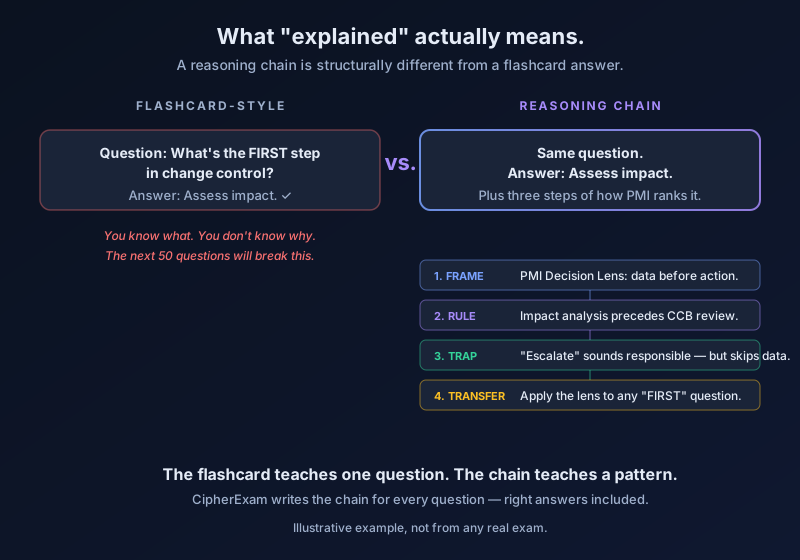
Traditional exam prep tells you what's correct. AI explanations teach you why.
Think about the last time you got a practice exam question wrong. What happened next?
If you're like most people, you saw the correct answer, maybe read a one-sentence explanation, thought "okay, I'll remember that," and moved on. Ten questions later, you'd already forgotten the reasoning.
This is the fundamental problem with traditional exam prep: the feedback loop is too thin. Right/wrong feedback tells you what happened but not why it happened or how to think differently next time.
What Makes AI Explanations Different
AI-powered explanations do something that static answer keys can't: they respond to your specific answer. Instead of showing a generic explanation of why option C is correct, they address why you chose option A and what thinking led you there.
This distinction matters more than it might seem. When an explanation says "The correct answer is C because of stakeholder engagement principles," that's information. When it says "You chose A, which addresses the symptom. But the exam framework expects you to address the root cause first — that's why C is the better answer," that's learning.
"C is correct. The project manager should engage stakeholders early in the planning process to ensure alignment."
Tells you the answer. Doesn't address your thinking.
"You chose B — updating the project plan. That's a reasonable instinct, but the PMI framework treats stakeholder alignment as a prerequisite to planning changes. Without stakeholder buy-in first, plan updates may need to be redone. That's why C is the stronger answer here."
Addresses your choice. Teaches the framework principle.
The Tutor Effect
Educational research has consistently shown that one-on-one tutoring is the most effective form of instruction. The reason is simple: a tutor responds to your specific misunderstandings, not generic ones.
AI explanations bring a version of this to exam prep at scale. The system sees what you chose, understands the reasoning gap, and addresses it directly. It's not perfect — no AI is — but the gap between "correct answer is C" and "here's why your thinking led you to A and how to adjust it" is enormous.
This is especially important for certification exams, where the questions are designed to have multiple plausible answers. The difference between wrong and right often isn't a knowledge gap — it's a reasoning gap. And reasoning gaps require explanation, not just correction.
Pattern Recognition Over Memorization
Something interesting happens when you read enough AI-powered explanations: you start recognizing the patterns.
You notice that PMP questions about team conflict almost always test servant leadership. You notice that Security+ incident response questions always expect identification before containment. You notice that Scrum questions enforce role boundaries even when the "practical" answer would blur them.
These patterns aren't something you can memorize from a textbook. They emerge from seeing the same reasoning framework applied across dozens of different scenarios. Each AI explanation is another data point that reinforces the framework's decision-making logic.
Efficiency: Learning More in Less Time
One of the most practical benefits of detailed explanations is study efficiency. Traditional prep often requires you to answer 500+ questions to build confidence. With reasoning-based explanations, the learning per question is significantly higher.
Instead of speed-running through a question bank and hoping patterns stick through repetition, you extract the reasoning from each question. Fifty well-reviewed questions with detailed breakdowns often teach more than 300 questions reviewed superficially.
For working professionals juggling exam prep alongside a job and personal responsibilities, this efficiency difference is practical, not theoretical. Less time needed means the exam becomes achievable even with a demanding schedule.
The Limitations
AI explanations aren't perfect. Occasionally they may oversimplify a nuanced concept or frame an explanation differently than a human tutor would. They work best as part of a broader study plan — not as a replacement for reading the foundational material.
The strongest approach is to combine AI-powered practice with a solid understanding of the certification framework's reference material. Use the explanations to bridge the gap between "I know the concept" and "I can apply the concept under exam conditions."
Why This Matters Now
Certification exams are getting harder, not easier. Exam bodies are continually updating their question banks to be more scenario-based, more ambiguous, and more focused on applied judgment. The old approach of memorizing a study guide and doing a brain dump on exam day is less effective than ever.
AI-powered explanations represent a meaningful shift in how exam prep can work. They don't just tell you what's correct — they teach you the thinking that makes the correct answer obvious.
And that's ultimately what every certification exam is testing: not what you know, but how you think.
Experience AI-powered exam explanations.
Every question on CipherExam comes with a detailed reasoning breakdown tailored to your answer.
No credit card required.